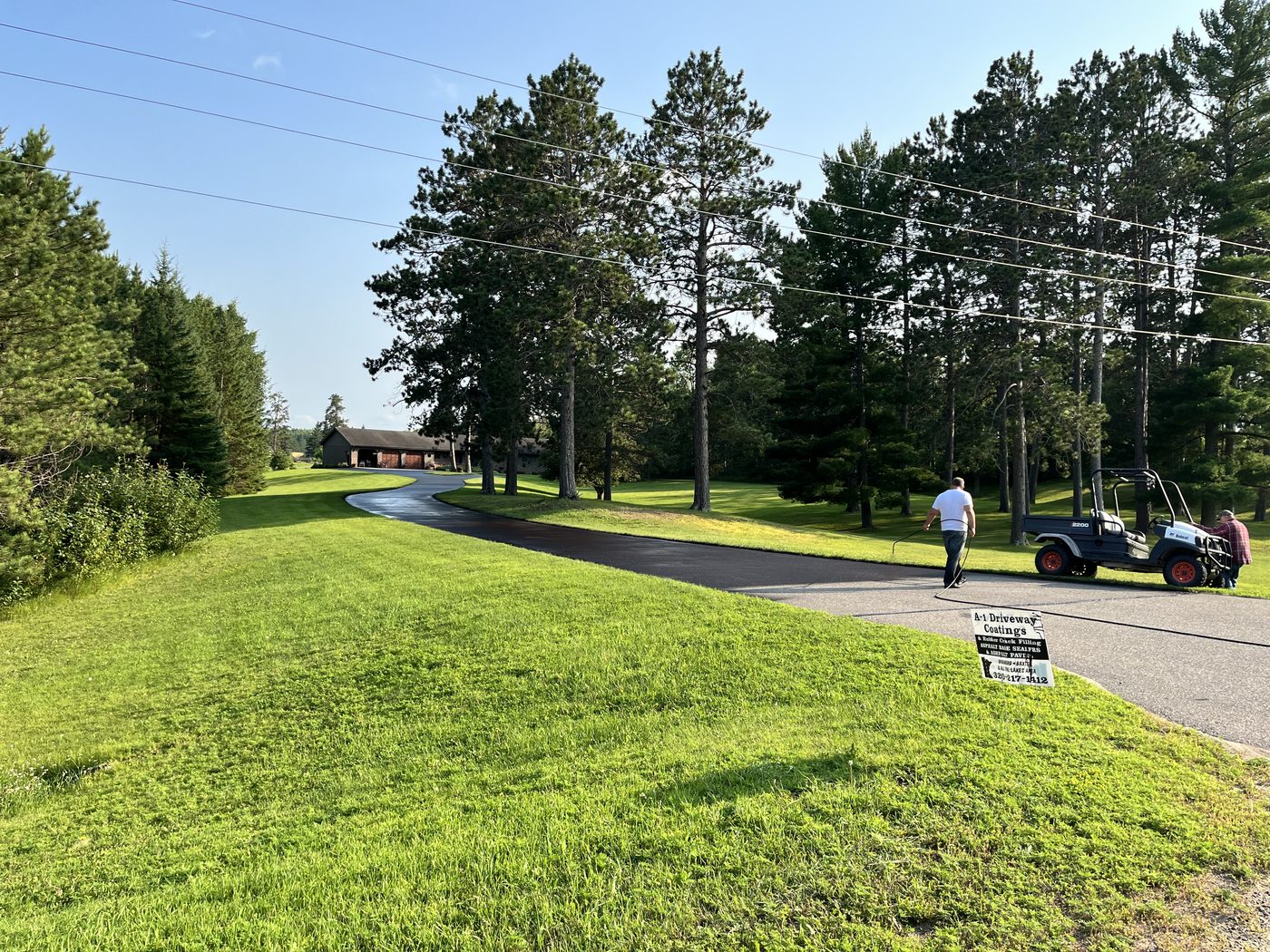
A high-standard sealcoating program built to defend driveways against freeze-thaw stress, UV oxidation, moisture intrusion, and seasonal traffic wear across Minnesota's lake country and rural corridors.
Request a Free Residential EstimateIf you own a home anywhere from St. Cloud up through the Brainerd Lakes and into the Bemidji corridor, your driveway is taking a beating that asphalt in milder states never sees. Minnesota driveways endure 42 to 60 inches of frost depth, dozens of freeze-thaw cycles each season, intense summer UV, and the constant moisture load that comes with lake-country living. This page explains exactly how professional residential sealcoating protects that investment, what it costs, when to do it, and how our program is built specifically for these conditions.
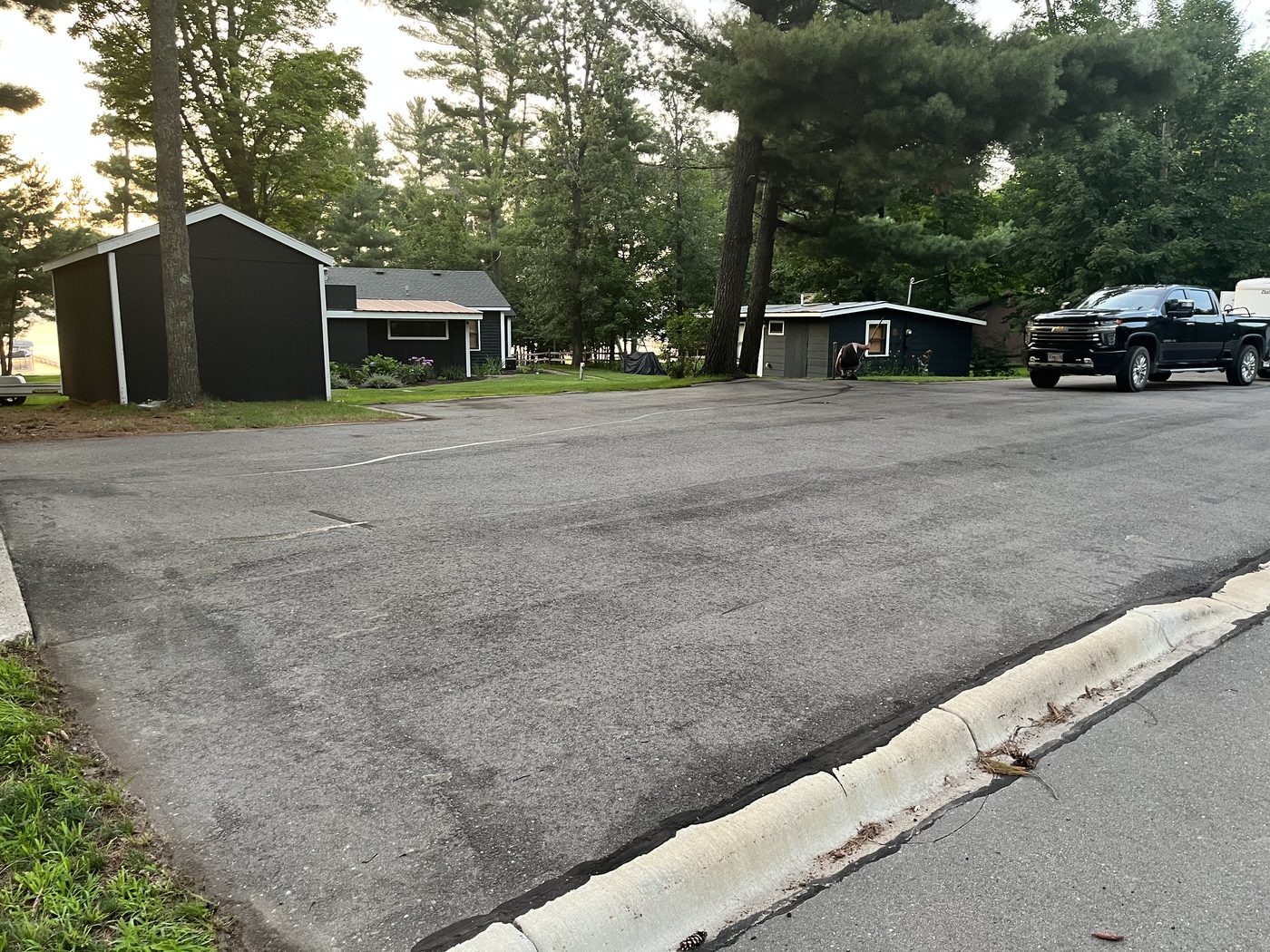
For most Minnesota homeowners, the driveway is one of the largest exterior hardscape investments on the property — frequently a five-figure replacement cost if it fails early. Unsealed asphalt oxidizes quickly under UV exposure, loses the flexible binders that hold it together, and opens surface pores that let water seep in. In a freeze-thaw climate, that trapped water expands as it freezes, widening cracks and lifting the surface from below. This is the exact deterioration pathway that turns a sound driveway into a cracked, raveling, pothole-prone surface within a handful of seasons.
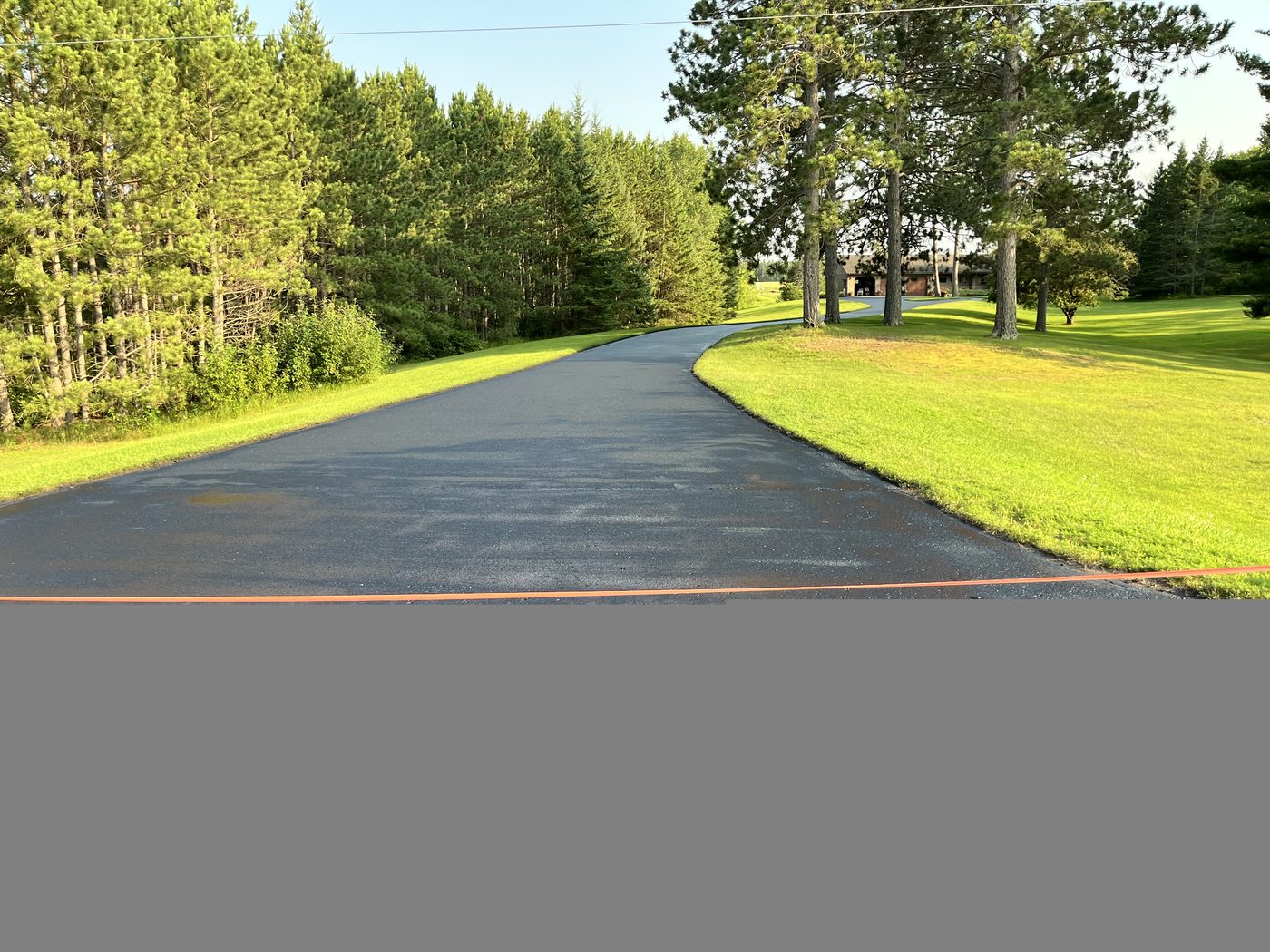
A structured sealcoating cycle interrupts that pathway. The coating restores a protective, water-shedding surface film, blocks UV oxidation, and resists fuel and oil staining. When paired with disciplined crack management and basic drainage awareness, professional sealcoating routinely extends practical pavement life by 7 to 15 years while preserving appearance and cutting major repair frequency.
Honest expectations matter. Sealcoating is a maintenance treatment, not a structural repair. Here is the real division of work:
This is why our process always starts with an honest assessment. If a driveway needs crack filling or pothole repair before sealing, we tell you up front — sealcoating over unaddressed structural damage wastes money.
Climate dictates product. We use polymer-modified asphalt emulsion sealer because it keeps its flexibility through Minnesota's extreme temperature swings, where a brittle, low-grade sealer would crack out within a season. Following Minnesota's coal-tar restrictions, asphalt-based emulsion is also the environmentally responsible choice for lake-country watersheds — a real consideration when your driveway drains anywhere near a shoreline. We cover this in depth in our guide to the Minnesota coal-tar ban.
Pricing is driven by square footage, surface condition, crack-prep needs, and access. As a planning reference, professional two-coat residential sealcoating in Minnesota generally falls in the range of $0.18 to $0.40 per square foot. A typical two-car suburban driveway lands in the low-to-mid hundreds of dollars; long rural and lake-access driveways are quoted per project after a quick site review. We break the numbers down further in our driveway sealing cost guide.
The cheapest quote is rarely the best value. A single thin coat applied over an unprepped, dirty surface looks fine for a few weeks and then fails — meaning you pay again sooner. A properly prepped two-coat job costs more up front and protects the asphalt far longer.
Most Minnesota driveways benefit from a 2- to 3-year reseal cycle, with an annual visual inspection for new crack development and drainage stress points. A few factors shorten that interval:
Shaded, well-drained driveways with light use can sometimes stretch to a 3- to 4-year cycle. The right answer is property-specific — which is exactly what the assessment determines. See our guide on how long sealcoating lasts in Minnesota and the best time to sealcoat.
Most driveways fall in the range of roughly $0.18 to $0.40 per square foot for professional two-coat sealcoating, depending on size, surface condition, crack prep, and access. Long rural and lake driveways are quoted per project after a site review.
Every 2 to 3 years for most residential driveways. Full sun, heavy turning traffic, and poor drainage shorten the cycle; shaded, well-drained driveways may extend it.
Late May through mid-September, when daytime temperatures stay above 50°F and overnight temperatures support proper curing. We avoid late-season jobs that cannot fully cure before freeze events.
Stay off foot traffic for at least 24 hours and vehicles for 48 to 72 hours, depending on temperature and humidity. Cooler, more humid conditions extend cure time.
Request a free estimate and secure a weather-optimized service window during Minnesota's sealcoating season.
Get My Free EstimateThe optimal window, temperature requirements, and why August might be too late.
Real pricing data, what affects cost, and how to avoid getting overcharged.
Realistic lifespan by climate, traffic, and product — and how to stretch it.